
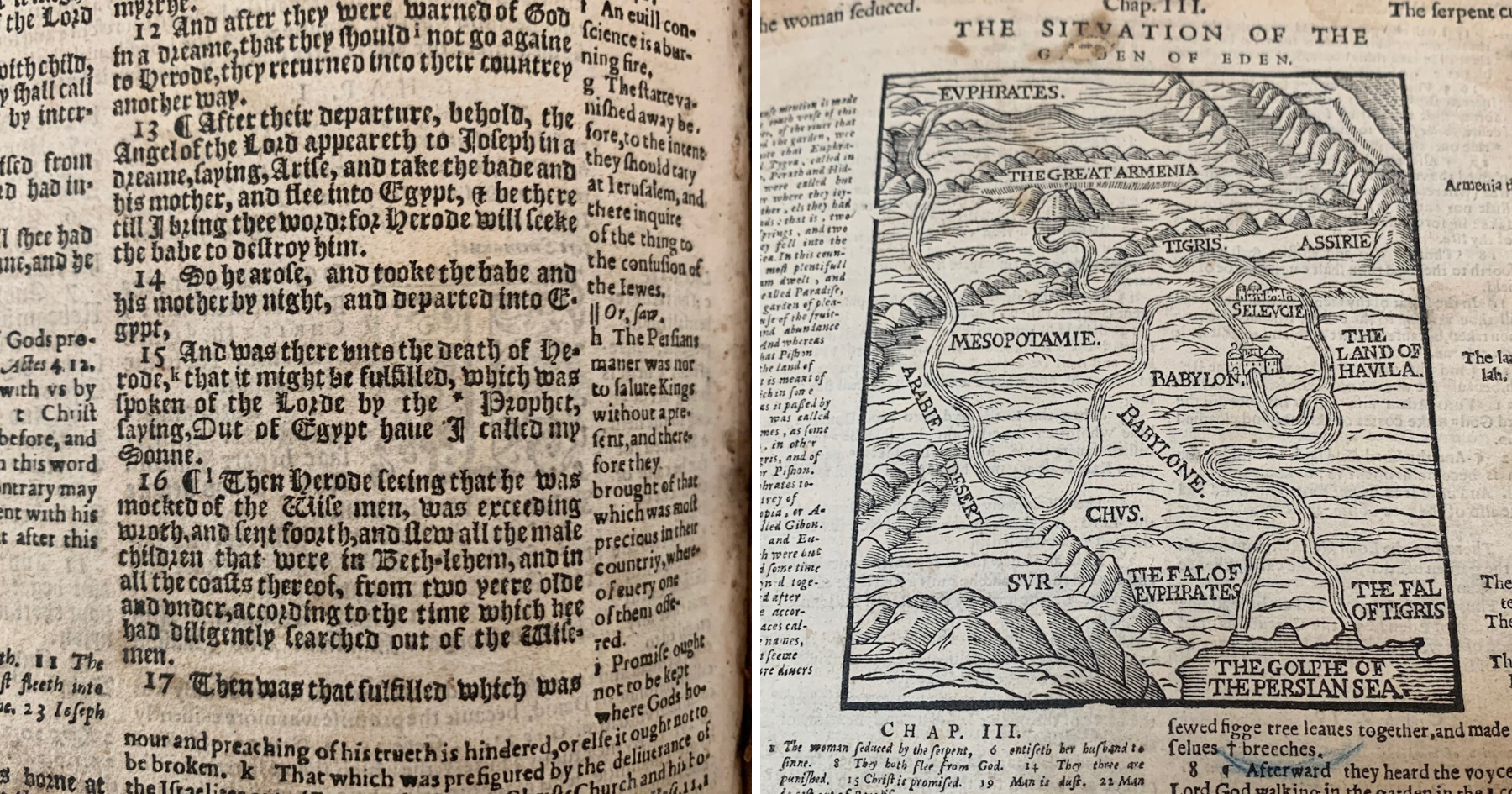
Two Geneva Bibles held in the archives, dating to 1599 and 1615, provide historically and theologically significant evidence from an era of religious upheaval in Britain and the European continent. This version of the Bible gets its name from the city in which it was developed and first printed in 1560.
Geneva was a hub of Protestant scholarship during the early modern era, and scholars flocked to the city from elsewhere in Europe. This included Protestants from England, who left home during the attempted restoration of Catholicism by Queen Mary I (known as Bloody Mary by Protestants).
A group of English Protestant exiles in Geneva developed this new English translation of the Bible from a reformed Protestant perspective. The Geneva Bible contains notes in the margins to accompany scripture, which was rare and controversial at the time. The Bible is also illustrated by elaborate woodcut prints.

The first edition of the Geneva Bible was dedicated to the recently crowned Queen Elizabeth I. Elizabeth accepted this dedication and approved the printing of the Geneva Bible in England but did not authorize it as the official Bible of the church due to her caution in fostering a moderate Church of England in the wake of religious turmoil. Despite this, the Geneva Bible became the common Bible of households in England.
Elizabeth’s successor, James I, took offence at marginal notes in the Geneva Bible that seemed to question the divine right of kings. This influenced his decision to develop the King James Bible, first printed in 1611, which became the official and gradually the dominant version in England.
Despite the popularity and royal sponsorship of the new King James Version, the Geneva Bible remained important and continued to inform and symbolize Protestant dissension in England. For example, Oliver Cromwell gave copies of the Geneva Bible to his army while campaigning against Royalist forces during the English Civil War, and English Puritans who sought greater freedom of religion brought the Geneva Bible with them when they settled in North America.