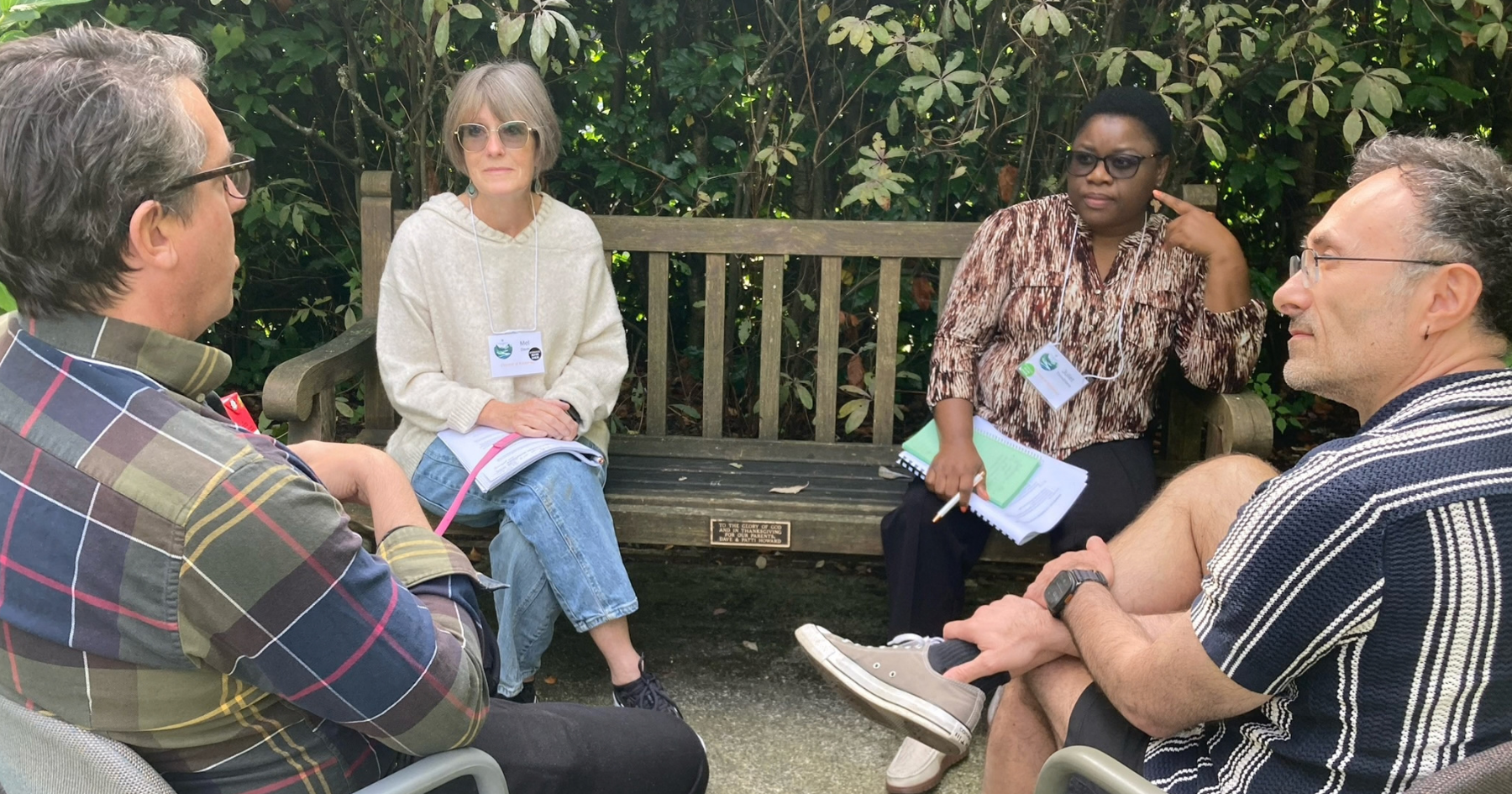
In May, the first cohort of just over 30 students, both lay and clergy, representing all the dioceses across the ecclesiastical province, graduated from the Provincial School for Congregational Development. Starting in September 2024, the students and four trainers — Bishop Anna, Jenny Replogle, Marnie Peterson (Diocese of New Westminster) and Andrew Stephens-Rennie (Diocese of Kootenay) — met in person in Kamloops, Nanaimo, Whitehorse, and Terrace. The group also met on Zoom.
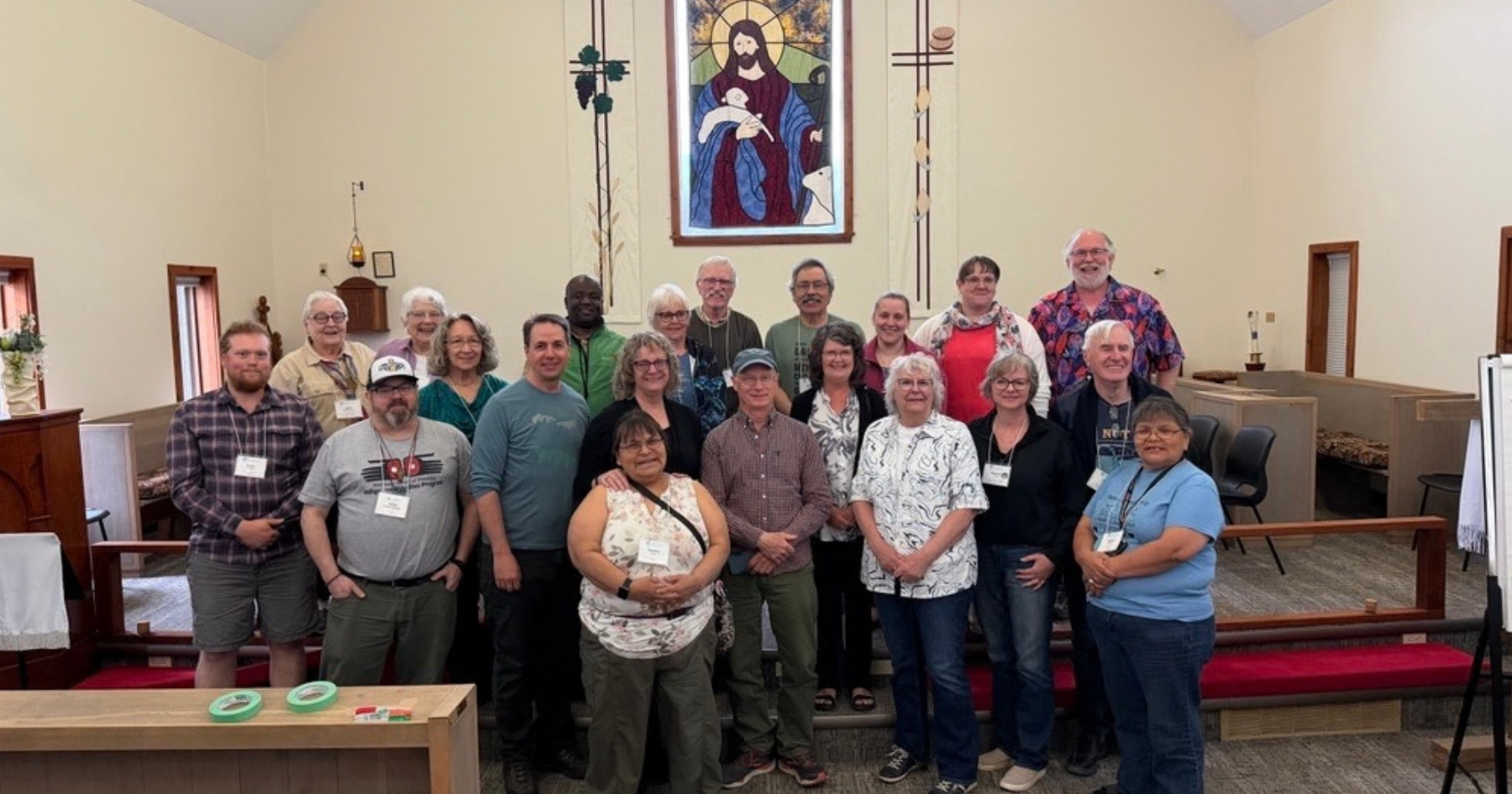
The provincial school is run and partially funded by the ecclesiastical province and grew out of the provincial summit held in Vancouver in November 2023. The summit brought together the provincial bishops and council to look at ways the six dioceses could work together.
Bishop Anna and Marnie Peterson, incumbent as St. Anne, Steveson, were both present at this meeting and had both participated in congregational development programs in the dioceses of New Westminster and Olympia (Washington).

“There were lots of conversations about ways to bring people together to develop relationships, to strengthen training for lay and clergy leaders,” says Marnie. “And as the conversation was going, Bishop Anna and I were both like, ‘We actually don’t need to make this up. We already have a way of doing this.’
“As the conversations progressed in the provincial summit, we just became really clear that [setting up a provincial congregational development school] was a thing we should probably offer to do. And so, Anna and I had several conversations, and ultimately at that meeting said, ‘Let’s just try it. Let’s just see what happens if we launch it on a provincial scale with support from the bishops.’”
All of the bishops were on board, and all selected teams of clergy and laity to participate in the first year of the provincial school.
“Seminary teaches you the theoretical realities of leading a parish the School for Congregational Development teaches you the practical. To be able to do this practical learning alongside not only parishioners but Anglicans from all over BC and Yukon has been truly a life changing time in my ministry.”
Leslie Flynn, incumbent St. Philip’s Anglican Church, Cedar
Now in its third school year, the program takes place over two years and alternates between the Year A and Year B curriculums. Participants can begin in either year. Year A focuses on developing an individual’s leadership skills. It covers practical skills, such as giving and receiving feedback, how to facilitate a meeting and how to plan and implement change. In Year A participants are encouraged to develop a sense of self-awareness around who they are in their church system and how their choices and behaviors can impact how their church system operates.
Year B then focuses on the church system as a whole, including different change models and how to use them. Participants also look at how to engage in ministry in their local context.
The program aims to bring people together from across the province, to share their experiences, and to feel less alone or isolated in their experience.
Marnie emphasises that the program is not about how to grow your congregation in numbers of parishioners. “It’s all about strengthening your congregation and giving your lay leaders and your clergy more choice about how they want to or feel called to respond to God’s invitation to them wherever they are.”
Jenny Replogle believes that school is about equipping laity and clergy “to live out their baptismal ministries and build healthier parishes.
“As a church, we talk a lot about the ministry of all the baptised but we don’t always do a good job of supporting and giving people tools to do the work of leading in the church. The School for Congregational Development offers tools and a shared language for clergy and lay leaders.”
The provincial bishops and council again gathered for a provincial summit this year in Kelowna and when Bishop Anna asked whether there was still enthusiasm for the program ,the response was a unanimous “yes!”
Reflecting on the successes of the provincial school so far, Marnie highlighted “the ways that folks have shown up and told their stories and been excited about what they are learning. I love watching the light bulbs go off, where they’re like, ‘Oh, this is something I can actually go and do when I get back [to my church] tomorrow.’”
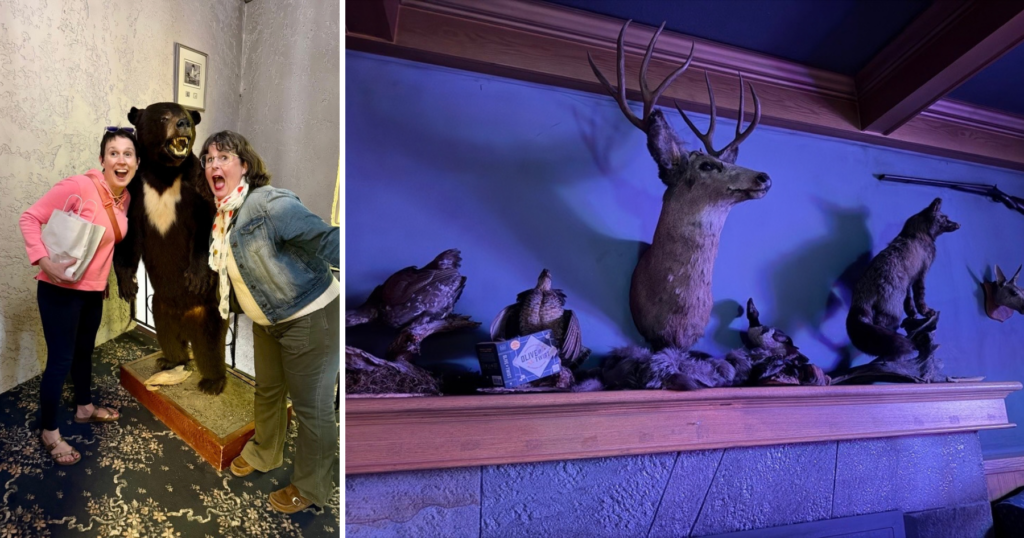
She also feels that the in-person sessions have been invaluable. “Getting to see this province and the beauty of it, and the beauty of these little churches or big churches. And, getting to see what happens there is, I think, absolute gold.” A funny example of this intra-provincial exchange happened in Terrace, during the graduation gathering at a local restaurant that happened to have an entire room dedicated to taxidermy. Marnie says it raised more eyebrows among those coming from bigger cities.
The program is now in Year A and recently welcomed it’s third cohort of clergy and lay leaders, with the first in-person event in Vancouver. For more information about the Provincial School for Congregational Development, visit the provincial website.