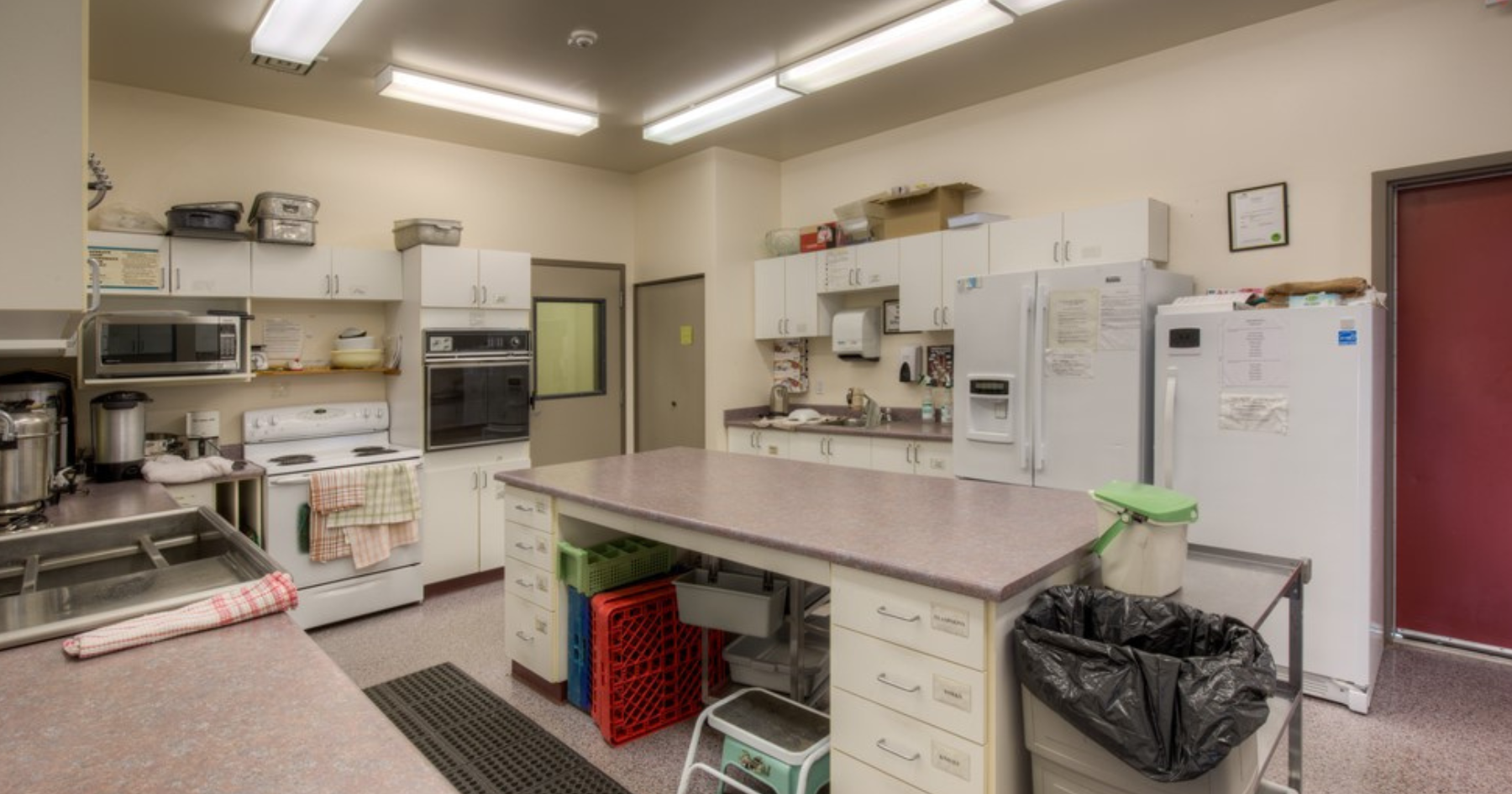
Perhaps this is an inappropriate topic for Lent, a season of fasting, but as bishop I am pleased to see that many of our parishes have recently or will soon undertake kitchen renovations. In the past few years, St. Mary Magdalene, Mayne Island and the Parish of Salt Spring Islands have both significantly upgraded their kitchens.
St. Philip, Cedar and St. John the Divine, Courtenay are about to, and even St. Columba, Tofino, where the building is too small to have a kitchen, is looking at expanding their “hospitality station” so that they can better host the coffee time they enjoy after their Sunday worship.
Other parishes, like St. John the Baptist, Cobble Hill and St. Peter, Lakehill, already have lovely big kitchens that host a variety of both parish and community events.

Finally, I think of the parish of St. Margaret of Scotland on Galiano Island that doesn’t have a kitchen but nevertheless manages to host amazing salmon barbeques out on their deck, and of St. Barnabas, Victoria, whose regular Sunday lunches have their parish hall bursting at the seams.
Diana Butler Bass, in her new book A Beautiful Year: 52 Meditations on Faith, Wisdom and Perseverance, reflects on the centrality of meals for our Christian life. She suggests that it wouldn’t be hard to argue that Jesus’ primary work was in fact organising suppers to embody the Kingdom of God:
“Throughout his ministry, Jesus welcomed everyone — to the point of contention with his critics — to the table. Tax collectors, sinners, women, Gentiles, the poor, faithful Jews, and ones less so. Jesus was sloppy with invitations. He never thought about who would be seated next to whom. He made the disciples crazy with his lax ideas about dinner parties. All he wanted was for everybody to come, to be at the table, and to share conversation.”
As we prepare for the Easter feast, I invite you to think about how your parish already eats together and what you could do to spend more time at table with one another and to invite more people, from all walks of life, to join you at the table. It is, in my experience, the best way to grow a parish both in bonds of affection and trust and also in numerical size.
I would also argue that in this day and age, when the fastest growing demographic in our diocese is individuals living along, it is imperative to create tables where all are welcome, all are included, all are fed and nourished, no matter their family, socioeconomic or any other “status.” Proclaiming the Kingdom of God must always and everywhere include the feasts where the people come east and west, north and south, and feast (Luke 13:29).