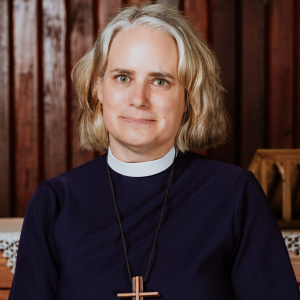
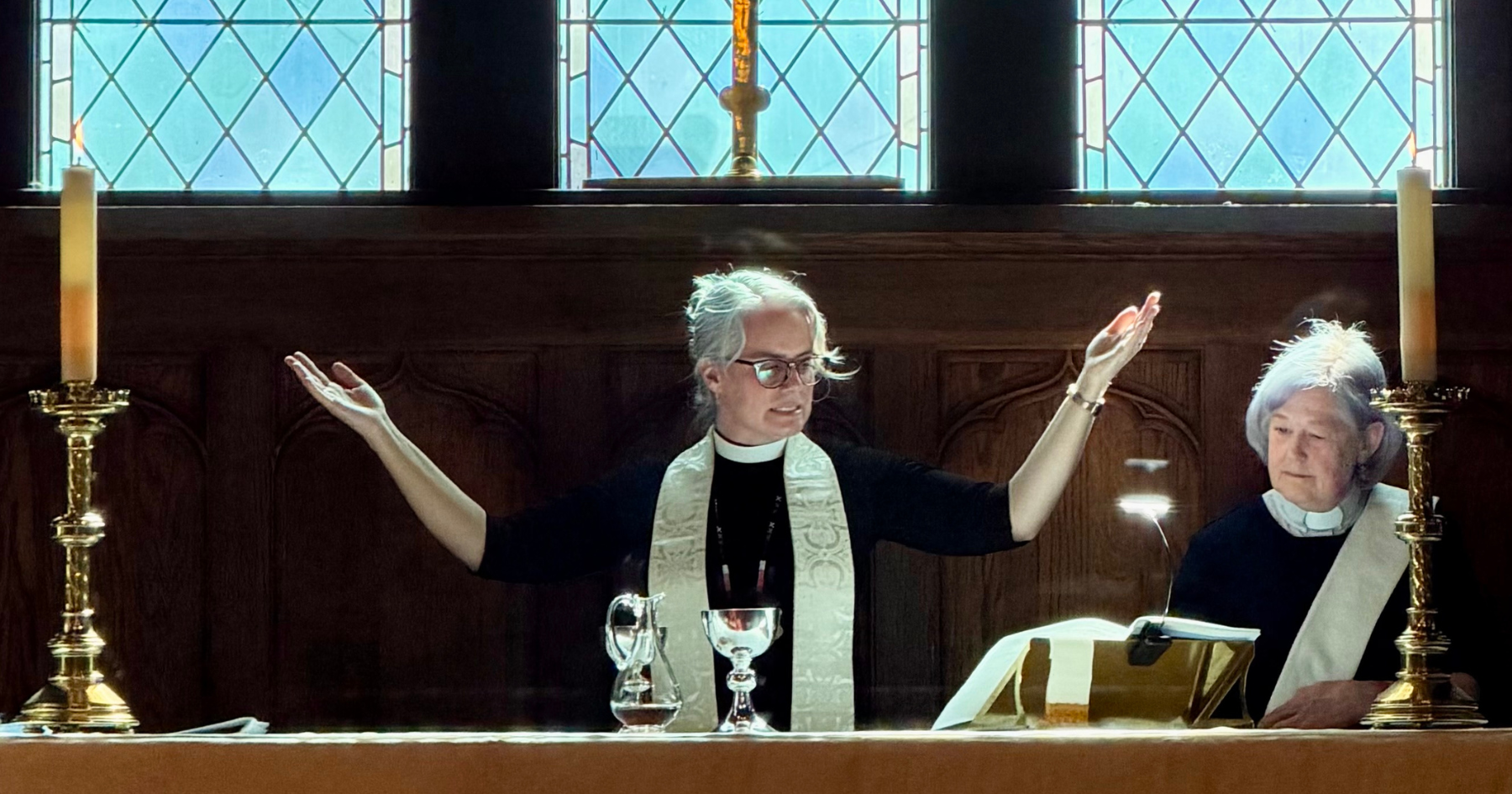
It has been a joy to travel across our beautiful diocese these past weeks and months. I can report that from Port Alice to Salt Spring, and from Tofino to Sidney, our parishes are growing both in numbers and in Spirit. There is a renewed sense of hope, possibility and mission as our parishes find new ways to welcome and include people into the life of Christ.
However, instead of focusing on the signs of life in this diocese, I’d like to share with you that at the provincial level of our church life, I also see signs that “the future is not going to look like the past and the future is bright.”
Our diocese belongs to the ecclesiastical province of BC and Yukon, and we are blessed that John Stephens, bishop of New Westminster, also serves as metropolitan. A couple of years ago John organised a provincial summit to get leaders from across the province together to look at how the six dioceses in our province can work together.

One of the main outcomes of that summit was the provincial congregational development school that will, in May, see its first round of graduates from the two-year program. Lay people from all six dioceses met four times in person and six times on Zoom over the two years to learn how to create healthy and dynamic congregations. We’ll be celebrating those who have completed the program later this month at the congregational school meeting in Terrace, BC. In September we’ll be welcoming a new cohort into the program.
All the congregational development school participants report that while the content of this program is excellent, what is truly invaluable are the relationships that are being made across parish and diocesan “boundaries” as Anglicans in this part of God’s creation.
In early July, those elected to Provincial Synod will be meeting for a couple of days in Kelowna with bishops and other representatives from across the province to think creatively about how we can work better together as a province. There is already work going on looking for efficiencies in administration and policy.
The reality is that three of the six dioceses in the province (our diocese, the Diocese of New Westminster and the Diocese of Kootenay) are big enough to have synod office staff teams while Yukon, Caledonia and Territory of the People are so small they have very few if any synod office staff.
The Diocese of Caledonia is the smallest diocese in the province and the one that is most in need of support. Bishop David Lehmann has no paid administrative support and, in addition to his considerable duties as bishop, he also looks after the cathedral congregation. I have no idea how he does it all.
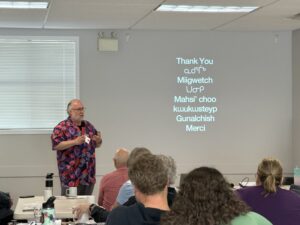
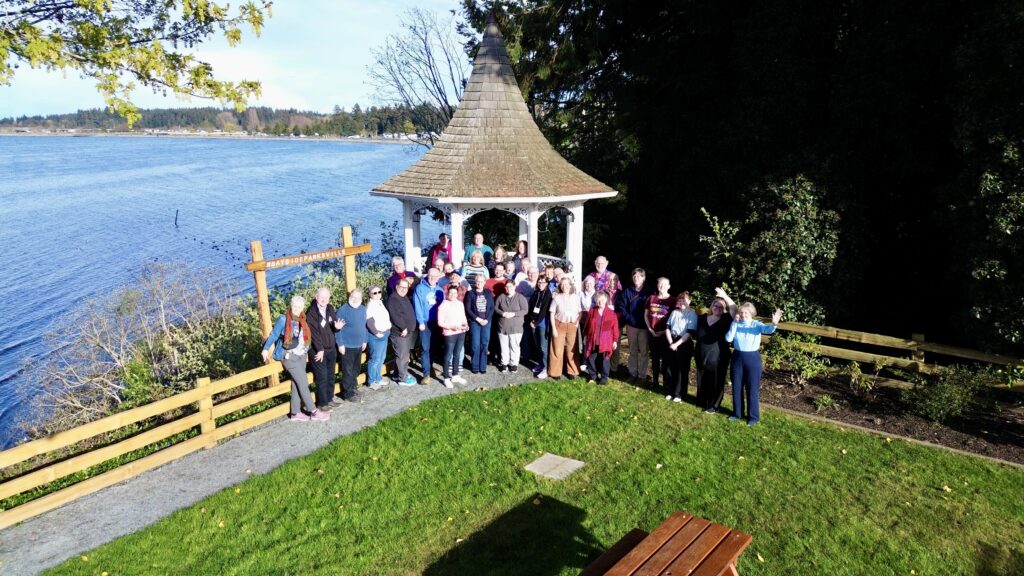
In April, our diocese welcomed Bishop David and the clergy of the Diocese of Caledonia to our clergy conference in Parksville. David was the preacher at our closing eucharist and it was such a joy to have him and his clergy with us. Their diocese is geographically huge but very small in numbers of clergy. There are currently only three full-time paid clergy other than Bishop David. Like all dioceses across Canada, he has a few vacancies to fill and is hoping that by year end that number will have increased to five. Lay people from Caledonia have participated in our lay leadership in worship course organised by Ingrid Andersen, so that their diocese, like ours, can continue to have worship in communities that cannot always have clergy.
Diocesan boundaries are inventions of the system and, while sometimes useful, must be disregarded if and when it makes more sense to work together as the body of Christ in order to nurture believers and serve our communities. Just as our diocese is growing in relationship with Caledonia, the Diocese of Yukon has been growing in relationship with New Westminster. Flights are such that it is relatively easy to get to Whitehorse from Vancouver, and clergy from New Westminster have been travelling to Whitehorse to do Sunday coverage when the clergy there are on holiday. The need for this may increase as the Dean of Yukon, Vincent Fenga, was recently elected as their bishop.
The Territory of the People and the Diocese of Kootenay already share many things, including their annual clergy conference. Our own Jenny Replogle was invited to be the speaker at their most recent gathering.
Just as I think it is a sign of hope and growth when parishes in our diocese reach across perceived boundaries to work together, I see tremendous hope and growth as we reach across diocesan boundaries. We are at a stage in history when we must reflect on our governance systems and how they do and do not serve our mission as God’s people. I am grateful to serve with colleagues who are willing and able to do that work. The future of the ecclesiastical province of BC and Yukon is not going to look like the past. And that future is bright!