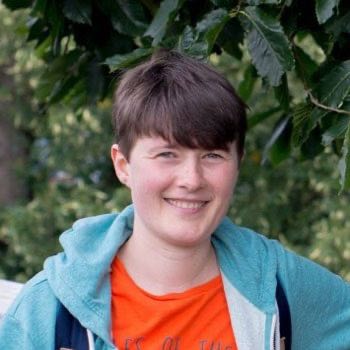
Rebecca Yeo was ordained a priest in this diocese on June 8, 2025. They currently serve as a spiritual care provider, or chaplain, at the University of Victoria’s Multifaith Centre, and as a curate at St. Andrew’s Anglican Church, Sidney. Faith Tides editor Naomi Racz sat down (virtually) with Rebecca on Oct. 20 to talk about their work at the university, and the important role the Multifaith Centre plays in creating a sense of belonging for students and faculty. This interview has been edited for length and clarity.
Naomi Racz: What does your role at the university involve? And what would a typical day look like?
Rebecca Yeo: My role at the University of Victoria is Spiritual Care Provider; that’s what UVic calls me. I’m also called chaplain, at the diocesan side. The campus ministry is a ministry of the diocese, and I work out of the Multifaith Centre at the university.

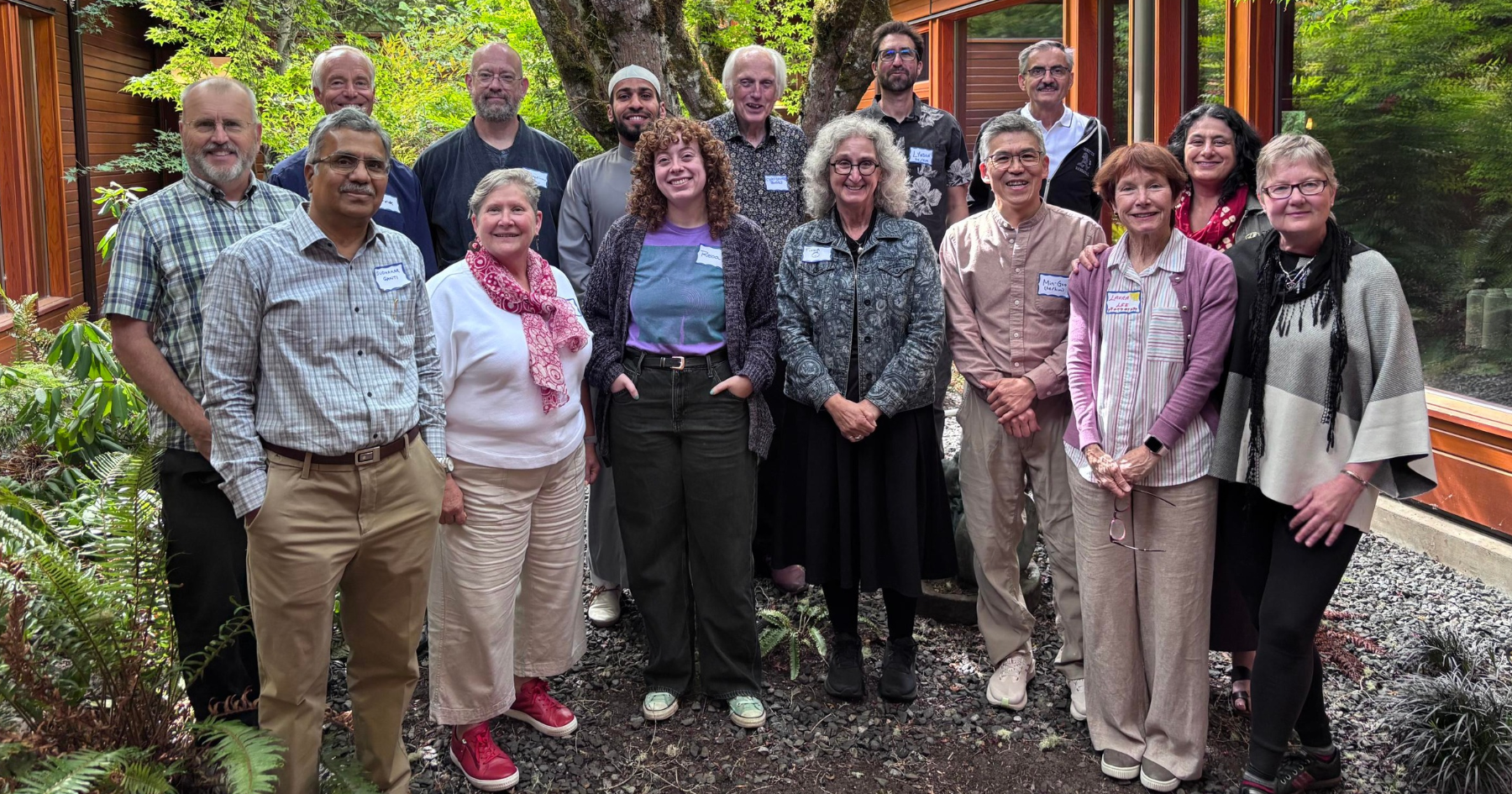
We’re a team of 16, from a few different faith traditions. So, about half different Christian denominations and then about half other traditions. Judaism, Islam, Zen Buddhism, Hindu and a few others. We are part of Student Wellness, so the university recognizes that spiritual wellness and wellbeing are part of a holistic model of health and wellness for students. And what we really try to be on campus is a place where, no matter who they are, people can just walk through the door and feel welcomed and like they belong.
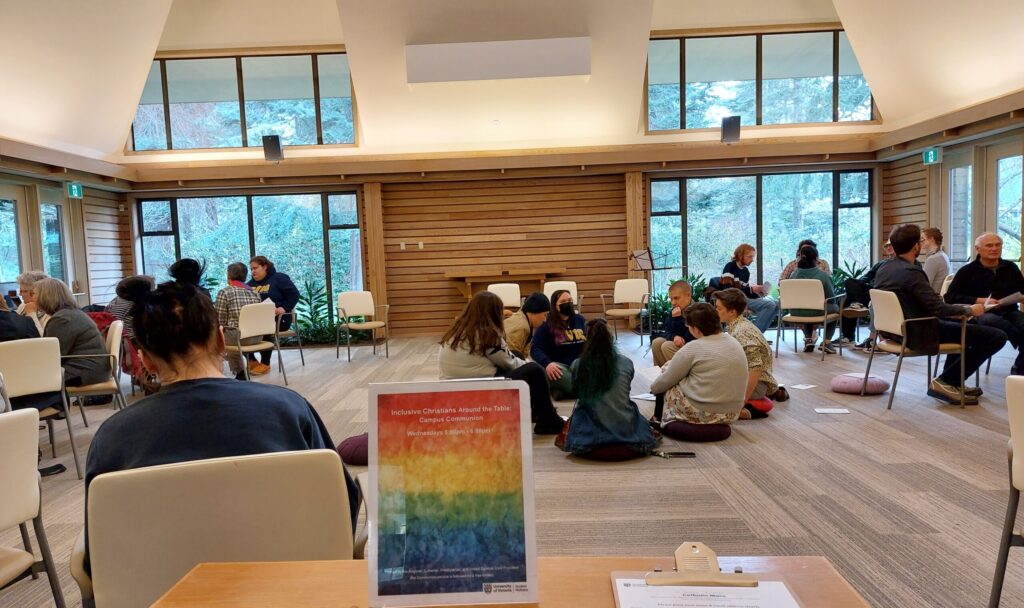
It’s a safe place to slow down and pray or just sit quietly. And then we each run formal programming as well. Some of that programming is specifically related to our religious tradition. I run a Bible study, and I share leadership of an ecumenical communion service weekly with my Lutheran, Presbyterian and United Church counterparts.
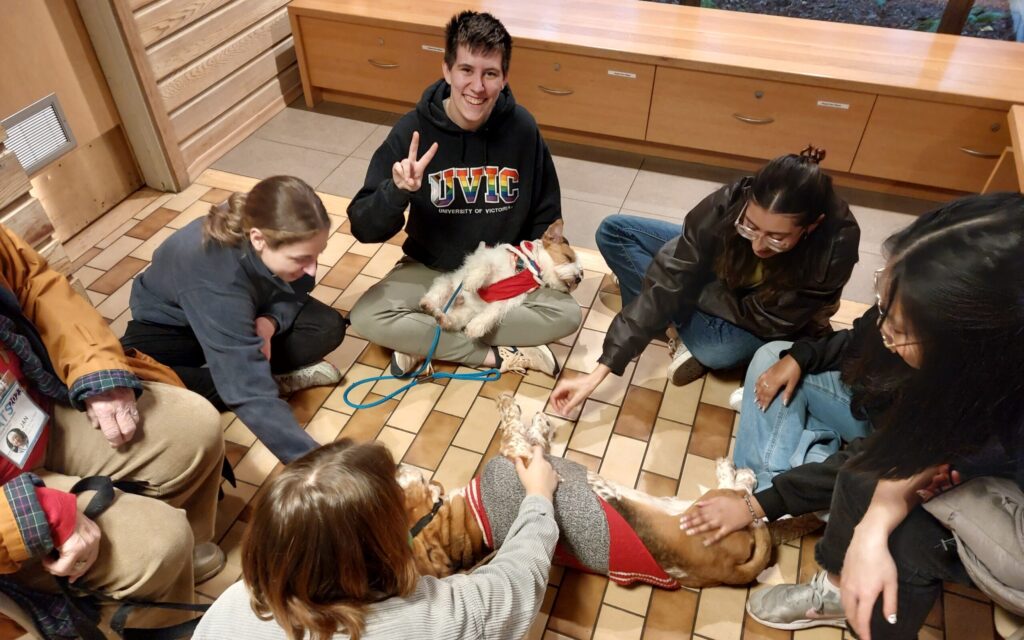
But then we also have lots of formal programming that is for anyone and everyone. There’s mindfulness, meditation and yoga, and I run a program called Pet Café where we bring in therapy dogs for the students to hang out with. Lots of programming that focuses on belonging and bringing people together, building community and relationships.
So I do that half-time, and I’m half-time curate at St. Andrew’s in Sidney as well.
Naomi: What would a typical day look like?
Rebecca: There’s usually a fair amount going on. We have programs that run seven days a week. There isn’t something running every moment of every day, but for at least a couple of hours a day there’s something.
When there’s a program running, there are students milling around, depending on the size of the program. Some of the programs are a few people, some are 100 people. When there’s not a program running, it’s a very calm and quiet space, and people will often be coming in and out to check the food pantry or to play the piano that we have in the celebration hall.
As for a day in the life for me, it depends a little bit. I have at least one day a week where I have a lot of programs, but my days are usually a combination of preparing for and running and cleaning up after programs.
At least a couple of times a week, I’ll have a meeting with a student. Sometimes it’s somebody I already know that I’ve made a connection with at a program. Sometimes it’s somebody who just walks into the building and they’re curious about what Christian programs are available on campus or what we do at Multifaith.
Sometimes we get referrals from the counselors as well. So, if somebody goes to see a counselor at Student Wellness, and faith and spirituality come up, and they’re connected to a specific tradition, sometimes the counselors will send them to one of us if they think that would be helpful.
The third thing that I spend a lot of my days doing is just engagement more broadly on campus. Sometimes we partner with the counselors, sometimes I’ve got a display table at some campus event that I’m helping to run. Sometimes, I visit classes or workshops and talk about how faith and spirituality connect with their subject matter.
So, a day in the life is very much programming, meeting with students and engaging with colleagues and people outside of Multifaith Centre.
Naomi: Are most people maybe already going to a church or have a faith practice, or does it really vary in terms of people’s backgrounds?
Rebecca: I find it a really interesting space to be in because there’s so much variety in people’s backgrounds. Some of the students I work with grew up in church, they grew up Christian, they still identify as Christian, and they’re looking for a place on campus to sustain and nurture their faith while they’re at university.
Sometimes I meet students whose first experiences with Christianity are happening at university, at Multifaith or in the spaces that I’m hosting with my colleagues. The ecumenical service that we run is linked to a club called Inclusive Christians, which is a LGBTQ+ affirming Christian club. So, that demographic might be people who are reconstructing and returning to church after some time away. I find it really meaningful to work with that demographic and to help people navigate that.
But also, many of the people coming in and out of the centre might not be religious at all, but they want to come pet some therapy dogs, for example. And I’m there, occasionally wearing my clerical collar, and we just hang out. Sometimes, they’re curious about faith. They may or may not point at my collar and go, “What is that? Why are you wearing that?” But more often, they just want to talk to someone about their lives as students.
People from other traditions will come to meet one-on-one with me as well. So, there’s a really interesting mix of backgrounds and that’s something that I find really exciting about campus ministry.
Naomi: You mentioned about creating belonging and I can imagine for students who are away from home, maybe far away from family, that’s an important aspect. Maybe you could speak to that a little bit more. How do you create belonging and what does that look like?
Rebecca: It’s something that we see every year, especially students who are international or they’ve moved to Victoria to come to university. But even for students who are more local, it’s still a big change in their lives. It’s a big transition. Your days look different from day to day and that can be isolating and lonely, that can cause anxiety.
And so, one of the biggest things that we try to do at Multifaith is to have as many times and spaces as possible for students, and other people who are connected with the university as well, to just be together. There are very few barriers to coming. And in a lot of cases, all they need to bring is themselves and a willingness to connect with other people.
A big way that we do that is with the food-based programming. Free food is a really strong motivator. Community is built around free food. And there are programs where the students are actually doing the cooking together, and then they’re eating. Those ones are, I think, particularly special to the participants.
But even outside of the programming, people really need third spaces where they can just go and they don’t have to justify going there. They’re not going tobe tested. They’re not going to be judged. They can just go and safely exist without a fee for entry or without evaluation. People really value having that space. We try to build belonging and bring people together around tables, and in worship spaces, and over meals, and by getting people to talk to each other.
I see this happen every year with Pet Café. We bring in therapy dogs from Pacific Animal Therapy Society. So, there’s dogs, and really kind human handlers of the dogs, and tea and coffee and homemade cookies. And people come for the dogs, but what happens is, as you’re crouching on the ground, petting a dog, and there’s somebody else across from you also petting the dog, you start talking. Each year this little community forms through the gateway of petting the dogs and that’s really special.