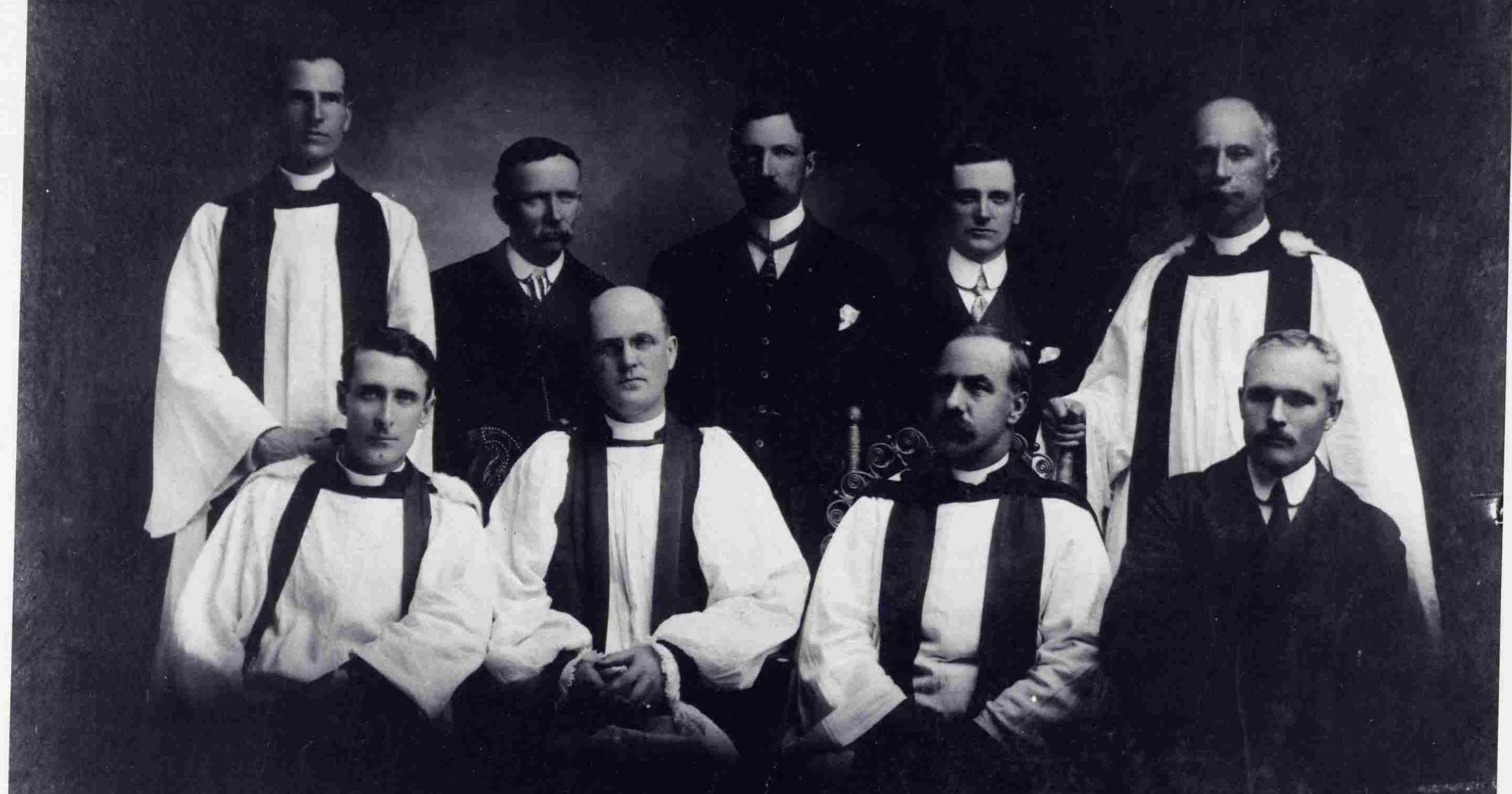
As I was preparing for the presentation on the colonial history of Cowichan that I will be giving at St Peter, Quamichan on Sept. 30, the name Arthur O’Meara kept coming up. O’Meara was both a lawyer and a priest of this diocese. From 1910, when he was transfered to this diocese from the Yukon, to his death in 1928, he was at the forefront of legal efforts to assert Indigenous Title in British Columbia and helped to draft the Cowichan Petition.
Over a century later, as issues of Cowichan Land Title are now front and centre once again, it is worth reflecting on the life and legacy of this Anglican lawyer, missionary and priest.
So just who was Arthur O’Meara?
Arthur Eugene O’Meara was born in 1859 in Port Hope, Ontario. His father, Frederick Augustus O’Meara, was Irish-born but emigrated to Canada to work as a missionary among the Ojibway. He is credited with the first Ojibway translation of the Book of Common Prayer.

Unlike his brothers, Arthur O’Meara did not immediately follow in his father’s footsteps and take holy orders. Rather, he studied at the University of Toronto and was called to the bar in 1885. From 1890–1891 he practised with the Toronto law firm MacDonald, Marsh and O’Meara, with MacDonald, the senior partner, being none other than Sir John A. MacDonald.
After twenty years as a lawyer, O’Meara could resist the “family business” no longer and in 1906, he was ordained as a deacon. He took a call in the Diocese of Selkirk (now called Yukon), where he led worship in tents and travelled to mining camps as a missionary.
The London Delegation and the Cowichan Petition
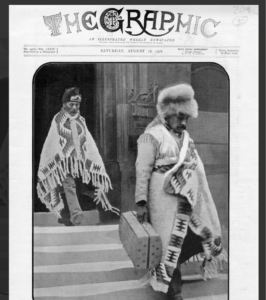
1906 was also the year that Sḵwx̱wú7mesh (Squamish) Chief qiyəplenəxʷ (Capilano), Quwʼutsun (Cowichan) Chief Charley Isipaymilt and Secwepemc (formerly Shuswap) Chief Basil David, having already advocated for better treatment and for Land Title for decades, travelled first to Ottawa and then to London (this became known as the London Delegation). They sought to address their communities’ concerns regarding land claims, regulations on fishing and hunting and the banning of the potlatch. Despite the protests of the Canadian high commissioner, they had a fifteen-minute audience with King Edward VII in the throne room at Buckingham Palace. They petitioned the King saying, “We have our families to keep the same as the white man.”
Despite the considerable efforts and expenses of the 1906 delegation, little progress was achieved. The Cowichan decided they needed to beat the English at their own game and bring in legal counsel. Methodist missionary Charles Tate, who was active with the Cowichan, called upon O’Meara to use his legal experience to help draft what became known as the Cowichan Petition. O’Meara delivered the Cowichan petition to the Privy Council in England in 1909.
The full ten-page text of the Petition is worth looking at and can be found here. The Cowichan Petition is the first instance of English law being used to defend Indigenous Title. It asserted Cowichan possession and occupation of their land since “time immemorial.” It argued that Indian Title was established in the Royal Proclamation of 1763 and that in British Columbia, the Cowichan never ceded their land, nor were they compensated for the loss of their land.
The Privy Council was unsure how to respond to the Cowichan Petition and tried to turn the matter back to the Canadian government. Lawyer Tom McInnes was asked, by the federal government, to provide a legal opinion on BC land title issues. McInnes’s one-hundred-page report largely upheld the legal arguments in the Cowichan Petition and said that the federal government, “as trustee of the Indians,” was under a legal obligation to put forward a case on their behalf, defending them from the province’s incursions on their lands.
BC Premier Richard McBride was vehemently against this, saying it “would jeopardize the very large sums of money already invested in the province by English and other investors” and that the issue of Aboriginal Title was “too serious a matter to be submitted to any court.”
As cases could not be brought to the Supreme Court of Canada without the province’s consent, McBride’s opposition prevented this matter from being heard here in Canada. It seemed that the only way to get the matter dealt with was to continue to try to get it before the Judicial Committee of the Privy Council in England, which (up until 1949) was the final court of appeal for UK oversees territories and Crown dependencies. O’Meara laboured, until his death, to get the matter of Indigenous land referred by the Privy Council to the Judicial Commission. He believed that this strategy would, ultimately, prevail and that the Royal Proclamation would be upheld. O’Meara never succeeded.
O’Meara in the diocese of islands and inlets
On Jan. 4, 1910, O’Meara travelled to Victoria for a meeting with the Bishop of British Columbia, William Perrin. Having heard from O’Meara about the “Indian land situation” there was unanimous agreement that O’Meara should continue his work on this issue. O’Meara resigned his position in the Yukon and was transferred to this diocese.
In March, a second meeting with Bishop Perrin and others resulted in resolutions as to the importance of Indian Tribes having independent legal counsel and that the federal government both be encouraged to provide such counsel and that funds be raised to assist O’Meara in this work. This was the beginning of a group that called itself “The Friends of the Indians.” The friends created pamphlets and held lectures to educate people about and advocate for Indigenous Rights.
At the same time as O’Meara was forming his Friends of the Indians, other groups were forming in BC as Indigenous Nations continued to work together to advocate for their rights. This work became especially urgent in 1912 when the federal and provincial governments created the McKenna–McBride Commission to resolve the “Indian land question” in British Columbia “once and for all.” In response, the Allied Tribes of British Columbia was formed as an umbrella group advocating for Indigenous Land Title, and O’Meara was asked to serve as their legal counsel.
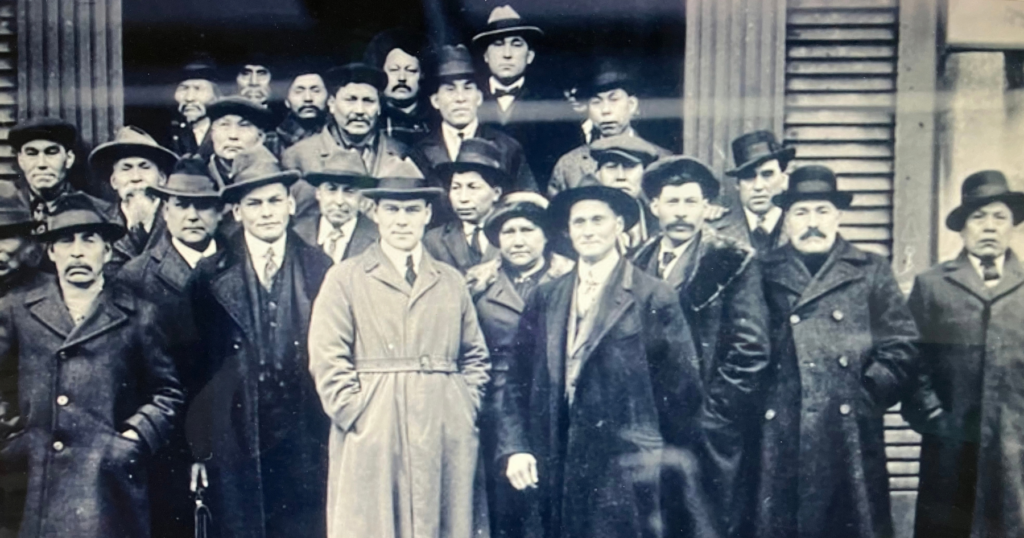
Between 1913 and 1916 the McKenna–McBride commission held hearings across BC with the aim of adjusting the size and location of Indian reserves. The Allied Tribes organised nations to attend and speak at these hearings. Unfortunately, the commission was successful in its not very well disguised mission of favoring settlers. The commission resulted in about 47, 000 acres of prime reserve land being “cut off.”
Another great injustice occurred in 1927 in the form of what historian Dr. Hamar Foster calls the “O’Meara amendment” to the Indian Act. This amendment made it illegal, without the permission of the government, for a lawyer to solicit or receive funds from an Indigenous band or member of a band. Feb. 15, 1927 transcripts of the House of Commons of Canada proceedings reveal that when Charles Stewart, minister of the interior and mines, introduced the amendment he, without quite naming him outright, definitely referred to O’Meara and suggested that this legislation would put a stop to this cleric–lawyer’s work. The amendment passed and stood until 1951.
The following year, Arthur O’Meara died unexpectantly at the age of 69. He died almost penniless. His finances, his health and his family life had all suffered due to his relentless work pursuing Indigenous Land Title.
O’Meara’s legacy
Arthur O’Meara was no saint. Records suggest he was difficult. There is a letter from Bishop Stringer, less than a year after he ordained him priest, saying he regretted ordaining him! And O’Meara did not, in his lifetime, achieve his goal of having Indigenous Title upheld by the highest court of the day, the Judicial Committee of the Privy Council. As Hamar Foster asserts in his article We Are Not O’Meara’s Children, the legal arguments that O’Meara put forth in the 1909 Cowichan Petition were not really dealt with until 1997 with the landmark Delgamuukw v British Columbia ruling in which the Supreme Court ruled that the provincial government did not in fact, have the right to extinguish Indigenous Title.
It should also be said that while O’Meara’s work advocating for Indigenous Land Title was admirable, historical records also record O’Meara’s support for residential schools. He failed to see them for what they were and assumed, falsely, that educating and proselytizing Indigenous children was a good thing.
All these years later I’d be fascinated to know what Arthur O’Meara would have to say about Truth and Reconciliation and, in particular, what he would have to say about the 2025 Cowichan Decision—a decision that came some 114 years after the Cowichan Petition. Might it be that the long arc of the moral universe does indeed bend towards justice?
Acknowledgement
I am extremely grateful for the work of Dr. Hamar Foster on the life and work of Arthur O’Meara. Not only was reading some of his legal writing helpful to me in putting this article together, but Dr. Foster sat down with me in Oak Bay and shared so much more about O’Meara with me, including the tidbit that O’Meara used to live on Cadboro Bay Road.
I am also grateful to Dr. Jesse Robertson, whose work on Our Land Stories (insert link) inspired this deep dive, and who also provided advice and archival documents to me.
Many thanks also to diocesan archivist Justine Soles for her work looking in our own archives for information on O’Meara.
Sources
Yukon who is who: Arthur Eugene O’Meara
“Arthur E. O’Meara, Friend of the Indians” by E. Palmer Patterson in The Pacific Northwest Quarterly
Dictionary of Canadian Biography
The British Columbia Indian Land Question from a Canadian Point of View
British Columbia Indian Land Question, Department of Indian Affairs and Northern Development fonds
British Columbia: An Untold History
Unceded: Understanding British Columbia’s Colonial Past and Why It Matters Now by George Abbott
“We Are Not O’Meara’s Children: Law, Lawyers, and the First Campaign for Aboriginal Title in British Columbia, 1908–28” by Hamar Foster, in Let Right Be Done: Aboriginal Title, the Calder Case, and the Future of Indigenous Rights