During his visit to the cathedral in 2009, then Prince Charles is said to have commented, “it’s not quite finished, is it?” That is the story of Christ Church Cathedral, Victoria. It has never been finished. The design for the present cathedral was commissioned in 1893 but then shelved for a generation until the 1920s. The cornerstone was laid in 1926, and the building consecrated in 1929, with construction cut short of completion by the Great Depression. The bell towers were completed by the next generation. The proposed central tower that would connect the cathedral to Memorial Hall never materialized, so in 1969 a residential tower was planned in its place but never built.
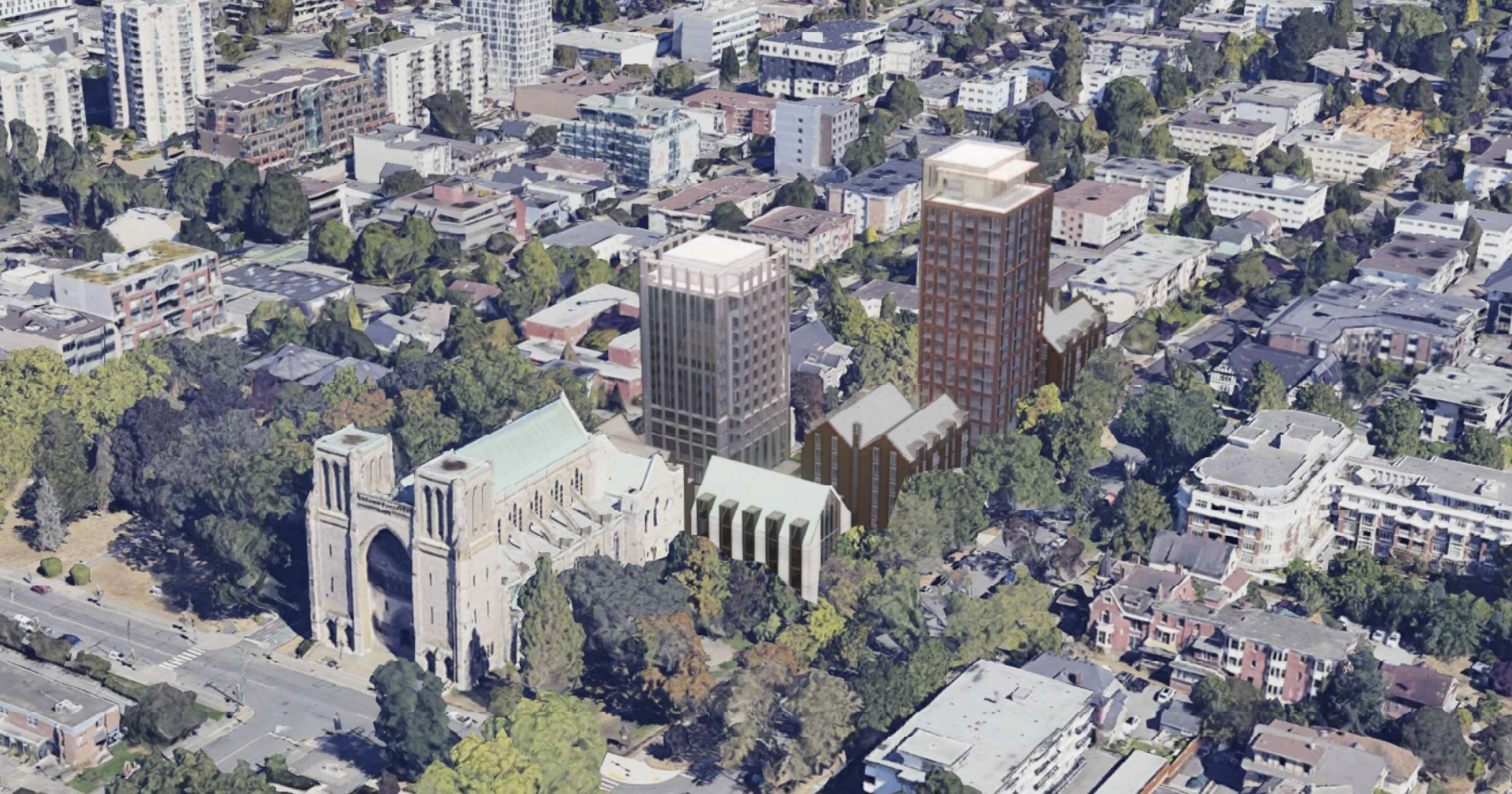
Over the decades and generations, houses on the property became homes for the cathedral staff and synod offices, and Memorial Hall was converted to a permanent space for Christ Church Cathedral School. The east wing with the Chapel of the New Jerusalem was added in 1991. Internal renovations to the cathedral, like the Hellmuth Wolff organ, and external additions to the property, such as the labyrinth, have been added over the years to enhance the ministry of this cathedral, never completing the work but always furthering the mission. In the present, a hundred years after the original construction began, we have dreamt of what our generation’s contribution to the development of the cathedral and its precinct would be. We have called this work “Building for the Future.”
The vision of this project is to secure the cathedral and its place in the community of Victoria and the Diocese of Islands and Inlets for generations to come. That vision is not just about financial security but about expanded mission and engagement with the city, making the cathedral a hub of activity and a center of community life.

The initial phase of the plan includes consolidating the synod and cathedral offices into one new building called Cathedral House, allowing for greater efficiency and aligning our vision and ministry. That building will also house meeting spaces and amenities that will keep us connected to the needs of the community we serve and the realities for which our ministries exist. The plans for the grounds also include new playgrounds and teaching gardens for the school’s use as we continue to support that aspect of our ministry.
There will be housing of various types, price points and configurations on the property, from grand towers to streetside apartments. This aspect of the project is meant not only to produce income but to use this land to do our part to alleviate the housing shortage facing Victoria. It is missional in its nature and not just a source of funding for future ministry.
The south lawn will remain public green space at private expense — a place for people to relax, meet together or connect to God. We are planning to mark the space as Lekwungen territory with artwork we co-commission with the Songhees and Esquimalt Nations, and by replanting with native flora marked with their Indigenous names. The hope is for this space to be a sign of what it means to acknowledge the history of the land under the cathedral and a demonstration of how we can learn to be in conversation, recognize each other’s contribution and live together with the First Peoples of this land. We are also budgeting for a payment to those Nations from the proceeds of the property as a recognition of that history and support for their resurgence.
There will be designated walkways across the property both north–south and east–west to encourage foot traffic. The bottom of the residential towers will be used for shops, restaurants, cafes and other commercial enterprises. With enhanced community spaces, we look to restore the grounds to a place of real relationship-building for the community, and place the cathedral at the center of civic life as cathedrals have been for centuries. We want to live more fully into the promise of “a cathedral for the city.”
To realize this vision for the cathedral commons, we submitted a rezoning application to the city to allow for a greater density of buildings on the site and to allow for residential and commercial land uses. Throughout 2024 and 2025, the rezoning application went back and forth between the diocese and cathedral and the City of Victoria as revisions were made to the plans to accommodate the city’s requests and recommendations. Finally, at a committee of the whole meeting on May 28, the city council voted 6-2 in favour of rezoning the precinct. We have received positive feedback from councilors and civic leaders that makes us think they believe in the vision of this project and the importance of the cathedral in civic life.
The remarks of King Charles still ring true — the cathedral is not finished; and it still won’t be after this project is actualized. We believe the cathedral is not finished yet and will not be until the dream of God is realized and tangible for all in our community. There is still much work to do, and Christ Church Cathedral has a central role in that work in this diocese and this city. That is why we are building for the future.