
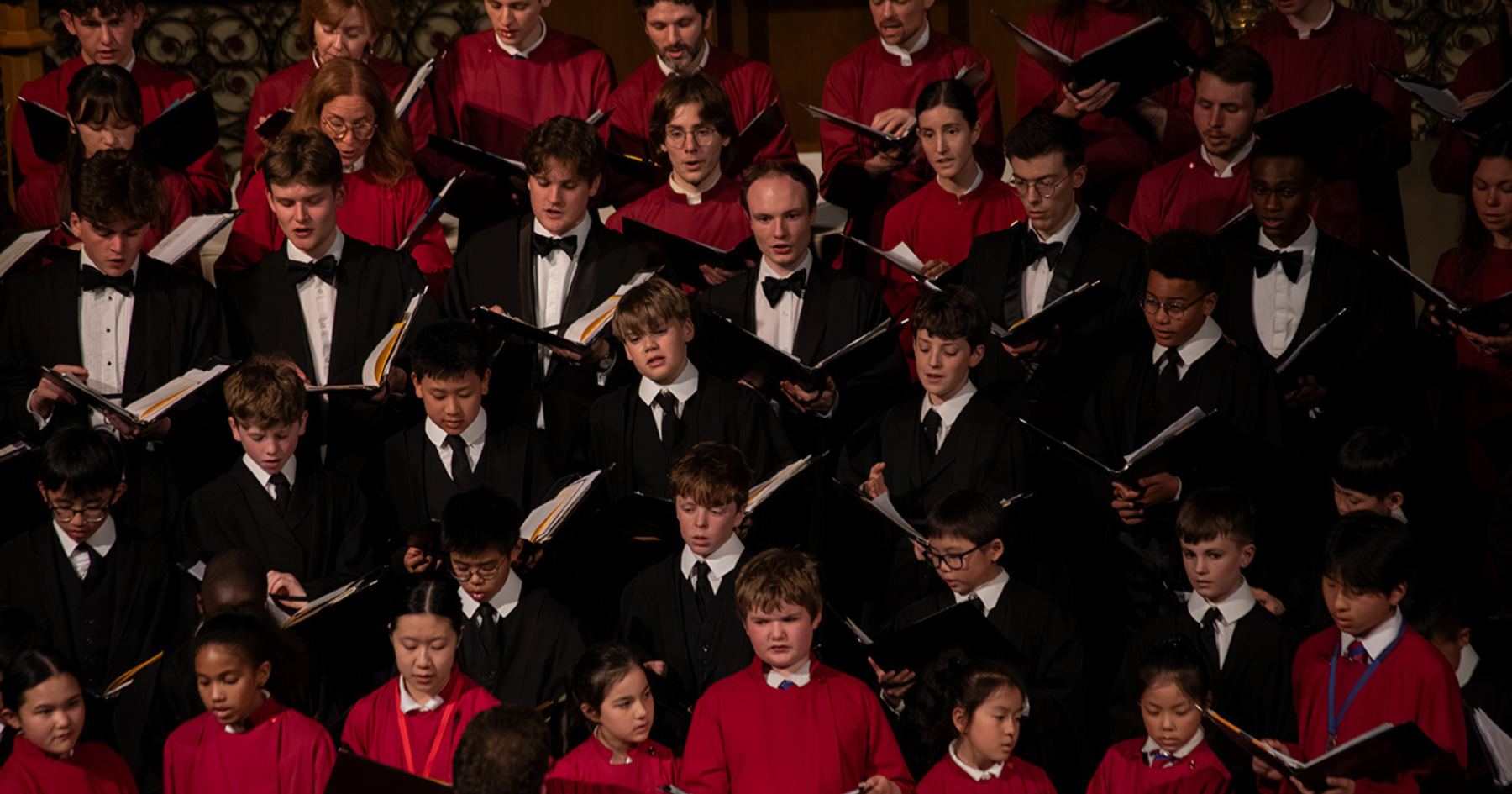
On April 11, the world-famous Choir of King’s College, Cambridge gave a sensational, inspirational and, I believe, transformative performance at Christ Church Cathedral. This group of impressive young people also sang with the Victoria Symphony on the back of a full Easter season back home.
As I reflect on the weekend and my conversations with their director, Daniel Hyde, the subject of music education emerges as a theme. Let’s face it: music education in Victoria is in trouble, though not for lack of skilled and hardworking teachers, parents who understand and care or students who thrive in the joyful and disciplined environment that music-making fosters. Music education is in trouble because of the steady whittling away of financial resources in the public education system.
Cuts to funding for music programs in SD61’s schools seem to be a depressing annual event. And even when students and private donors come forward to keep things going for another year, we all know that this issue comes up every year because music education is simply not valued in the way it should be.

So, what is the solution? For inspiration, let’s look at the ecosystem where an ensemble like the Choir of King’s College can flourish, training 8- to 13-year-old youngsters to sing with understanding and delight. It’s no surprise that the UK is where some of the world’s best choirs and musicians are trained and educated, even with their own troubling pattern of steady cuts in government funding.
Despite these cuts, UK music educators continue to push for better access to music for all children. Increasingly, cathedrals — the keepers of a centuries-old choral tradition — have been stepping up to fill the gap left by government cuts.
Some of England’s 42 cathedrals have recently joined the National Schools Singing Programme, a privately funded initiative that sends choral specialists into public schools. As reported in the Church Times, “[These] cathedrals have been chosen for their diversity and their capacity to reach some of the most music-deprived areas of the country. Their inclusion… means that the National Schools Singing Programme is expected to reach around 20,000 children in more than 200 state schools every week.”
Under a new generation of leaders, our tradition is neither elite nor ossified. Quite the opposite: It is reaching more people, and it is under constant renewal.
St. Paul’s Cathedral (where our own choir will be singing services this summer) is also responding to a growing need for music education in public schools. Their choral partnership programme, led by William Bruce, now reaches over 30 schools. The purpose of St Paul’s Cathedral choral partnership program is simple, says Bruce: “to provide high quality music education.”
Here at Christ Church Cathedral, we continue to focus on choral music education and outreach, taking on projects to build up our relationship with local school choirs. I reviewed some of these about a year ago in a piece published in Faith Tides (Cathedral connects young people to music education, September 2025). But there’s still lots of work to be done.
Could the cathedral be a partner in launching a transformative expansion of choral and music education in Victoria? Such an initiative could enrich young lives, strengthen community connections and preserve a centuries-old musical tradition for a new generation.
I invite you to dream with me. The cathedral’s reputation for excellence in music education makes it an ideal place to ignite passion for music and performance, where young people can soar higher than they ever thought imaginable with instructors and musicians of distinction.
We are still in the early stages of achieving this vision, but I can feel a buzz in the air after the exhilarating performances by the Choir of King’s College, Cambridge. I believe that the enduring legacy of their visit could be a bold next step for the future of music education in Victoria. Join me in making that vision a reality.